

Why Operational Excellence Matters for Startups?
Startup growth is exciting—but without a foundation of operational excellence, it quickly turns into chaos. This concept goes beyond efficiency. It’s about building systems that support long-term growth and alignment.
According to Mc Kinsey, operational excellence goes beyond efficiency- it builds systems that support long-lasting growth.
Still, many teams try to scale without clear systems. As a result, everything starts to feel reactive. That’s where operational excellence makes all the difference.
It’s not just about being efficient. It’s about building a structure that helps your company grow with purpose. As a result, at the heart of this structure are three key pillars:
- Clarity
- Consistency
- Scalability
Together, they form a framework that keeps your team aligned, focused, and ready to scale. So, let’s break them down.
Clarity: The First Pillar of Operational Excellence
Without clarity, even high-performing teams lose direction. In other words, clarity means everyone knows what to do, how to do it, and why it matters.
What clarity looks like:
- Documented roles and processes
- Clear team goals and KPIs
- Aligned expectations across teams
For example, a team uses a shared Notion dashboard to track priorities. Each member knows their role, deadlines, and how their work supports the company’s goals.
How to improve clarity:
- Set clear goals each quarter
- Create and share SOPs (standard operating procedures)
- Use centralized tools like Notion or Slack to share updates
Pro tip: Clear communication prevents duplicated work and reduces decision fatigue. Consequently, this helps improve productivity of the team.
Consistency in Operational Excellence
Therefore, clarity shows the path. However, consistency keeps you moving forward. Indeed, it means doing the right things the same way every time—until a better method is found.
Why consistency matters:
- Builds trust and reliability
- Reduces guesswork
- Makes teamwork smoother
For example, your support team uses the same response process for every customer. As a result, tickets are resolved faster, and customer satisfaction improves.
How to build consistency:
- Standardize your repeatable processes
- Train your team regularly
- Audit and update workflows as you grow
In other words, consistency helps your team save energy and focus on what matters most.
Scalability: The Growth Pillar of Operational Excellence
However, many startups build for today—not for what’s coming next. That’s where scalability comes in. It means your systems work well now—and still work when your team doubles.
What scalable ops look like:
- Tools and workflows that handle growth
- Documentation that helps new hires onboard fast
- Automation that removes repetitive tasks
For example, you set up an automated onboarding workflow. Therefore, when the team grows from 5 to 50 employees, the system still works — without extra effort.
How to improve scalability:
- Choose flexible tools like Airtable or Zapier
- Automate repetitive work early
- Build light playbooks new hires can follow
Scalability isn’t about complexity. Indeed, it’s about keeping things simple—and making sure they work at any size.
Why All 3 Pillars Matter—Together
You can’t scale chaos. That is why, operational excellence only works when clarity, consistency, and scalability work together:
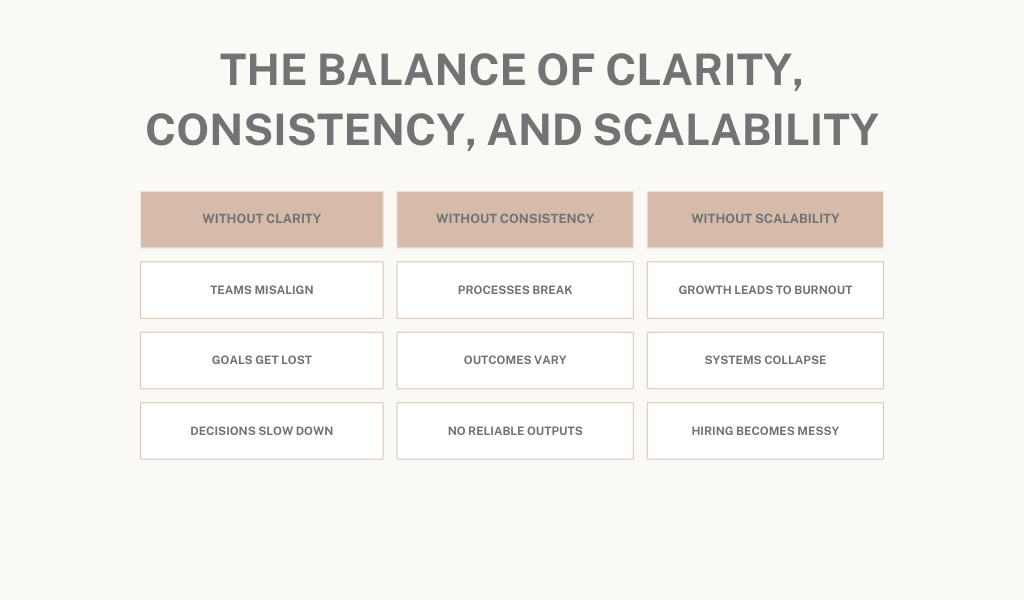
So, miss one, and your operational foundation weakens.
Final Thoughts: Build Before You Break
Operational excellence isn’t about perfection. It’s about setting up systems that supports your team as the company grows.
Ultimately, startups that invest in clarity, consistency, and scalability don’t just survive—they grow smarter and faster.
Question for You:
Which of the three pillars is hardest to build in your startup—clarity, consistency, or scalability? Let me know in the comments.
Want more?
Check out Operational Excellence vs. Efficiency: A Startup Guide to learn how to balance speed with sustainability.
[…] more hustle — it needs more structure. Strong startup systems are part of a broader approach to operational excellence — especially when clarity and consistency are critical for […]